Table of Contents
Understanding and evaluating business costs is a fundamental aspect of running a profitable and sustainable company. Whether you operate a small startup, a growing enterprise, or an established organization, knowing where your money goes helps you make informed decisions, allocate resources effectively, and improve long-term financial performance.
Business costs encompass everything a company spends to operate, produce goods or services, and maintain growth. By carefully analyzing expenses, organizations can identify waste, optimize spending, improve profitability, and strengthen their competitive position.
This guide explores how to evaluate business costs, including the different types of costs, methods for tracking expenses, and practical strategies for cost management and reduction.
Why Evaluating Business Costs Matters
Every business decision has financial implications. Without a clear understanding of costs, companies risk overspending, reducing profitability, or making poor strategic choices.
Evaluating business costs helps organizations:
- Improve profit margins
- Create realistic financial plans
- Develop accurate pricing strategies
- Allocate resources efficiently
- Monitor cash flow
- Reduce unnecessary spending
- Support long-term growth
Cost evaluation is not simply about cutting expenses. It is about understanding where money is spent and ensuring each expense contributes value to the business.
Understanding Different Types of Business Costs
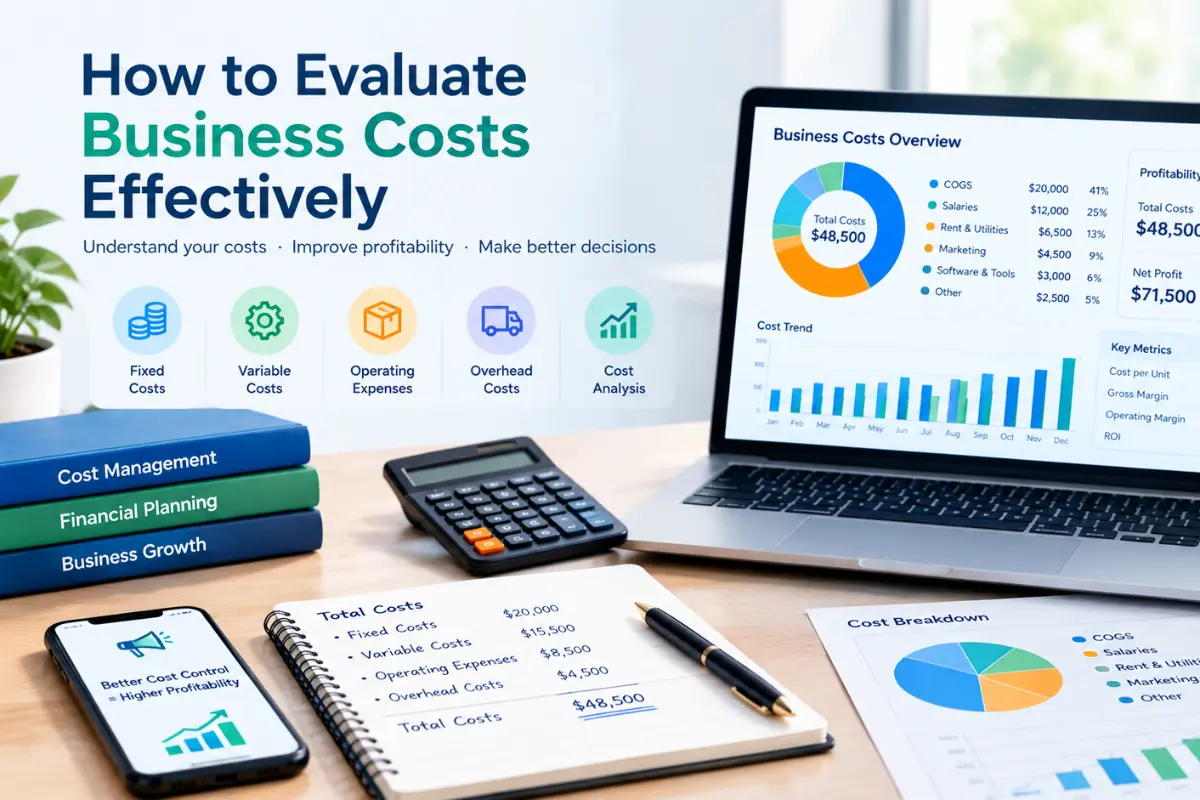
Before evaluating costs, it is important to understand the major categories of expenses that affect business operations.
Fixed Costs
Fixed costs remain constant regardless of production levels or sales volume.
Common examples include:
- Office rent
- Insurance premiums
- Equipment leases
- Salaries for permanent staff
- Property taxes
For example, a company paying $3,000 monthly rent must pay that amount whether it produces 100 units or 10,000 units.
Fixed costs provide predictability but can create financial pressure during periods of lower revenue.
Variable Costs
Variable costs change based on business activity and production output.
Examples include:
- Raw materials
- Packaging
- Shipping expenses
- Sales commissions
- Utility usage related to production
As production increases, variable costs typically rise. Understanding these expenses helps businesses determine profitability at different production volumes.
Operating Expenses
Operating expenses are the day-to-day costs required to run the business.
These expenses often include:
- Employee wages
- Marketing costs
- Software subscriptions
- Office supplies
- Utilities
- Equipment maintenance
Monitoring operating expenses regularly helps maintain financial stability and operational efficiency.
Overhead Costs
Overhead costs are indirect expenses not directly related to product creation but necessary for business operations.
Examples include:
- Administrative salaries
- Office rent
- Accounting services
- Legal fees
- Human resources expenses
Businesses often overlook overhead costs, yet they can significantly impact overall profitability.
Production Costs
Production costs refer to expenses directly associated with creating products or delivering services.
These typically include:
- Raw materials
- Manufacturing labor
- Machinery operation
- Production facility costs
- Quality control activities
Accurate tracking of production costs supports better pricing and operational decisions.
Administrative Costs
Administrative costs support overall business operations rather than direct production.
Examples include:
- Executive salaries
- Office management
- Administrative staff wages
- Licensing fees
- Corporate software
Although these costs do not directly generate revenue, they are essential for maintaining business infrastructure.
Steps to Evaluate Business Costs
A systematic approach ensures cost evaluations provide meaningful insights.
Step 1: Gather Financial Records
Begin by collecting all relevant financial documents.
These may include:
- Bank statements
- Income statements
- Expense reports
- Vendor invoices
- Payroll records
- Tax filings
- Budget reports
Comprehensive records provide a complete view of business expenditures.
Step 2: Categorize Business Expenditures
Organizing expenses into categories improves visibility and analysis.
Typical categories include:
- Payroll
- Rent
- Marketing
- Technology
- Production
- Utilities
- Transportation
- Insurance
Categorization helps identify which areas consume the largest portion of your budget.
Step 3: Calculate Total Monthly Expenses
Determine your total monthly spending.
Use the following formula:
Total Business Costs = Fixed Costs + Variable Costs + Operating Expenses
This calculation creates a baseline for measuring future performance.
Step 4: Analyze Cost Trends
Review expenses over several months or years.
Look for patterns such as:
- Rising utility bills
- Increasing supplier costs
- Seasonal fluctuations
- Changes in labor expenses
- Growth in software subscriptions
Trend analysis helps identify recurring cost drivers and opportunities for savings.
Step 5: Measure Cost Efficiency
Compare expenses against revenue generation.
Key questions include:
- Are marketing expenses producing results?
- Is labor productivity improving?
- Are production costs competitive?
- Is overhead increasing faster than revenue?
Evaluating cost efficiency highlights areas where spending may not be delivering sufficient value.
The Importance of Expense Tracking
Effective expense tracking is essential for evaluating business costs accurately.
Without proper tracking, businesses often experience:
- Budget overruns
- Cash flow problems
- Missed tax deductions
- Inaccurate forecasting
- Reduced profitability
Best Practices for Expense Tracking
Use Accounting Software
Modern accounting tools automate expense monitoring and reporting.
Popular solutions often provide:
- Real-time expense visibility
- Expense categorization
- Invoice management
- Budget reporting
- Financial forecasting
Create Consistent Expense Categories
Standardized categories improve accuracy and reporting quality.
Record Expenses Immediately
Timely recording prevents lost receipts and forgotten expenditures.
Review Reports Regularly
Monthly financial reviews help identify unusual spending patterns before they become significant issues.
Evaluating Fixed and Variable Costs
A crucial part of cost analysis involves understanding the relationship between fixed and variable expenses.
Assessing Fixed Costs
Review fixed costs by asking:
- Are facilities larger than necessary?
- Can contracts be renegotiated?
- Are subscriptions fully utilized?
- Are insurance policies optimized?
Reducing fixed costs often creates long-term financial improvements.
Assessing Variable Costs
Evaluate variable costs by examining:
- Supplier pricing
- Material waste
- Shipping efficiency
- Labor utilization
- Production workflow
Even small improvements in variable costs can generate significant savings over time.
Creating an Effective Operating Budget
An operating budget serves as a financial roadmap for business activities.
Components of an Operating Budget
A comprehensive budget typically includes:
Revenue Projections
Estimate expected sales and income.
Fixed Expenses
Include recurring obligations such as rent and salaries.
Variable Expenses
Forecast costs tied to production or sales activity.
Emergency Reserves
Allocate funds for unexpected situations.
Benefits of Budget Planning
Strong budgeting helps businesses:
- Improve forecasting accuracy
- Control expenditures
- Manage cash flow
- Support profitability goals
- Make data-driven decisions
Budget reviews should occur regularly to ensure alignment with changing business conditions.
Cost Management Strategies
Successful businesses continuously focus on cost management rather than occasional cost-cutting initiatives.
Implement Financial Monitoring Systems
Track key cost metrics in real time.
Examples include:
- Cost per unit
- Labor cost percentage
- Operating expense ratio
- Customer acquisition cost
These metrics provide actionable insights for management.
Benchmark Industry Performance
Compare business expenses against industry standards.
Benchmarking helps determine whether spending levels are competitive or excessive.
Improve Process Efficiency
Efficiency improvements often reduce costs without sacrificing quality.
Examples include:
- Automation
- Workflow optimization
- Better inventory management
- Employee training
Negotiate with Suppliers
Supplier negotiations can significantly reduce production and operating costs.
Potential opportunities include:
- Bulk purchasing discounts
- Long-term pricing agreements
- Improved payment terms
- Alternative sourcing options
Cost Reduction Techniques
Reducing costs should focus on eliminating waste rather than sacrificing quality or customer satisfaction.
Reduce Unnecessary Overhead Costs
Review all indirect expenses and eliminate underutilized resources.
Examples include:
- Unused software subscriptions
- Excess office space
- Redundant services
- Duplicate processes
Optimize Staffing Resources
Analyze workforce productivity and scheduling.
Possible improvements include:
- Cross-training employees
- Flexible staffing models
- Performance-based incentives
- Process automation
Improve Energy Efficiency
Energy-related expenses can often be reduced through:
- LED lighting
- Smart energy systems
- Equipment upgrades
- Preventive maintenance
Automate Repetitive Tasks
Automation can lower labor costs while improving accuracy.
Common areas include:
- Accounting
- Payroll
- Inventory management
- Customer support
- Reporting
Financial Planning and Cost Evaluation
Financial planning and cost evaluation work together to support business success.
Effective financial planning involves:
- Revenue forecasting
- Cost estimation
- Risk management
- Investment planning
- Cash flow analysis
Businesses that regularly evaluate costs are better prepared to respond to changing market conditions and economic uncertainty.
Key Financial Ratios for Cost Analysis
Several financial ratios can help evaluate business costs effectively.
Operating Expense Ratio
Formula:
Operating Expenses ÷ Revenue × 100
This ratio measures operating efficiency.
Gross Profit Margin
Formula:
(Revenue − Cost of Goods Sold) ÷ Revenue × 100
This metric reveals how effectively production costs are managed.
Net Profit Margin
Formula:
Net Income ÷ Revenue × 100
This ratio shows overall profitability after accounting for all business expenditures.
Common Mistakes When Evaluating Business Costs
Many organizations weaken profitability by making avoidable mistakes.
Ignoring Small Expenses
Minor recurring expenses can accumulate into significant annual costs.
Focusing Only on Cost Reduction
Aggressive cost cutting may harm quality, productivity, or customer satisfaction.
Failing to Monitor Costs Regularly
Cost evaluations should occur continuously, not just during financial difficulties.
Overlooking Indirect Costs
Businesses often underestimate overhead and administrative costs, leading to inaccurate pricing and budgeting decisions.
Using Incomplete Data
Cost evaluations based on incomplete information may lead to poor strategic decisions.
Building a Cost-Conscious Business Culture
Cost management should involve the entire organization.
Leaders can encourage cost awareness by:
- Sharing financial goals
- Establishing accountability
- Rewarding efficiency improvements
- Training employees on expense management
- Encouraging innovation
When employees understand how expenses impact profitability, they become active contributors to financial success.